Personal Finance: Tips for Managing Your Money
Manage your money wisely to reduce stress, avoid debt, and build long-term financial stability.
5/8/20241 min read
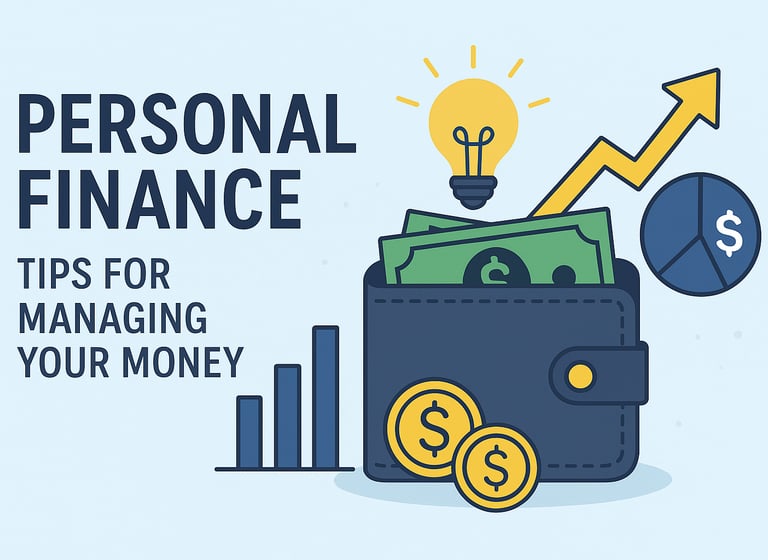

Personal Finance: Tips for Managing Your Money
Managing your personal finances effectively is one of the most important skills for achieving long-term stability and wealth. Yet, many people overlook the basics, leading to stress, debt, and missed opportunities. By following a few essential principles, you can take control of your money and build a secure future.
1. Create a Realistic Budget
A budget is your financial blueprint. Start by tracking your income and expenses for a month. Categorize spending into essentials (housing, food, utilities) and non-essentials (entertainment, dining out). Aim to allocate a portion of your income—ideally 20% or more—towards savings and investments.
2. Build an Emergency Fund
Unexpected expenses, such as medical bills or car repairs, can derail your finances. An emergency fund of at least three to six months’ worth of living expenses ensures you won’t have to rely on loans or credit cards during tough times.
3. Reduce and Manage Debt
High-interest debt, particularly from credit cards, can quickly spiral out of control. Focus on paying off the most expensive debts first while making minimum payments on others. Avoid taking on new debt unless it’s for an appreciating asset or necessary investment.
4. Invest for the Future
Saving is essential, but investing allows your money to grow. Explore options like mutual funds, stocks, fixed deposits, or retirement accounts. The earlier you start, the more you can benefit from compound interest.
5. Monitor and Adjust Regularly
Life circumstances change, and so should your financial plan. Review your budget, spending, and investments every few months to ensure you’re on track to meet your goals.
Conclusion
Managing personal finances isn’t about restricting yourself—it’s about making informed choices that bring you closer to your goals. By budgeting wisely, preparing for emergencies, reducing debt, and investing for the future, you can achieve both financial stability and peace of mind. Remember, small, consistent actions today can lead to big results tomorrow.